

Common SEO Mistakes Small Businesses Make
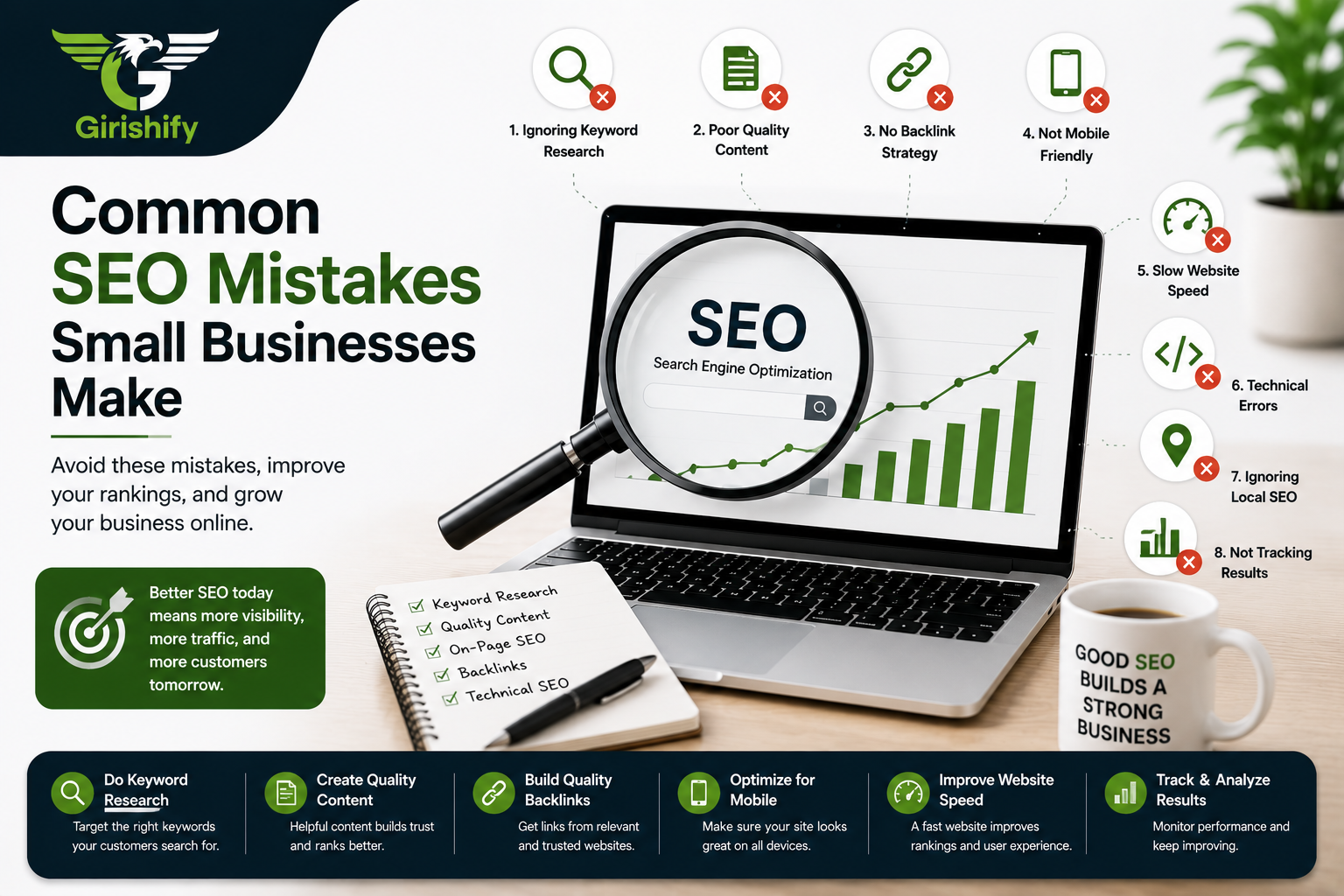

If you have ever spent hours tweaking your website only to check Google and find your business buried on page five, you know how frustrating SEO can be.
A lot of small business owners treat SEO like a dark art or a checklist of tricks to fool an algorithm. But search engines aren’t easily fooled anymore. They just want to show the best, most relevant answer to the person searching.
Most small businesses don’t lose the search rankings game because their competitors have million-dollar budgets. They lose because they make a few basic, easily fixable mistakes that accidentally hide their site from Google.
If your website isn’t bringing in organic leads, check to see if you are tripping over any of these common SEO hurdles.
1. Guessing What Customers Are Searching For
The biggest mistake you can make is optimizing your site for keywords you think are important, rather than what your actual customers type into a search bar.
-
The Mistake: Using overly technical jargon or fancy corporate phrasing that regular people never use.
-
The Reality: If you are a local contractor, styling your page around “Custom Residential Infrastructure Upgrades” won’t help you if real people are just searching for “kitchen remodeling near me.”
-
The Fix: Use straightforward keyword tools or simply look at the auto-suggest results on Google to find the plain-English phrases your market uses.
2. Ignoring Local SEO Basics
If you serve a specific city or region, trying to rank globally is a waste of energy. Your immediate focus should be winning your backyard.
-
The Mistake: Neglecting your Google Business Profile (formerly Google My Business) or leaving out your location data on your website.
-
The Reality: When someone searches for a service near them, Google pulls up the “Local Pack” map listings before it even shows standard web pages.
-
The Fix: Claim your free Google Business Profile, make sure your phone number, address, and name are identical across the web, and place your physical location clearly in your website’s footer and contact pages.
3. Writing Text for Bots Instead of Humans
We have all landed on websites that read like they were written by a broken robot—where the same phrase is repeated in every single sentence.
-
The Mistake: Keyword stuffing. Shoving your target phrase into the text fifty times hoping Google ranks you higher.
-
The Reality: Google’s algorithm is incredibly smart. It tracks how long real users stay on your page. If your content is unreadable, users will hit the back button instantly, sending a clear signal to Google that your site isn’t helpful.
-
The Fix: Write naturally. Answer the customer’s actual questions first, and use your key phrases organically in your headings and main text where they naturally fit.
4. Forgetting the Technical Foundation
You can have the best content in the world, but if your site’s backend is a mess, search engines will struggle to index it.
-
The Mistake: Let’s face it—ignoring page speed, mobile layout, and basic security.
-
The Reality: Google explicitly penalizes sites that take ages to load or look broken on a smartphone. Furthermore, if your site doesn’t have an active SSL certificate (meaning it uses HTTP instead of the secure HTTPS), a big “Not Secure” warning will scare traffic away.
-
The Fix: Compress your visual assets, clean up heavy or unused plugins, use standard responsive grids (like Bootstrap), and make sure your platform runs lean.
Final Thoughts
Good SEO isn’t about outsmarting an algorithm; it’s about making your business incredibly easy to find and your website incredibly useful to visitors. Clean up your backend, write clear, human-centered content that addresses real questions, lock down your local presence, and let consistency handle the rest.