Organic Marketing vs Paid Advertising: Which Is Better?

If you’re trying to grow your business online, you’ve probably heard about organic marketing and paid advertising. Both can help you reach new customers, but they work in different ways.
A common question business owners ask is, “Which one should I invest in?” The answer depends on your goals, budget, and how quickly you want to see results.
Let’s look at both options in simple terms.
What Is Organic Marketing?
Organic marketing is all about attracting people naturally without paying for every click or visit.
This includes:
- Writing helpful blog posts
- Improving your website’s SEO
- Sharing useful content on social media
- Sending email newsletters
- Optimizing your Google Business Profile
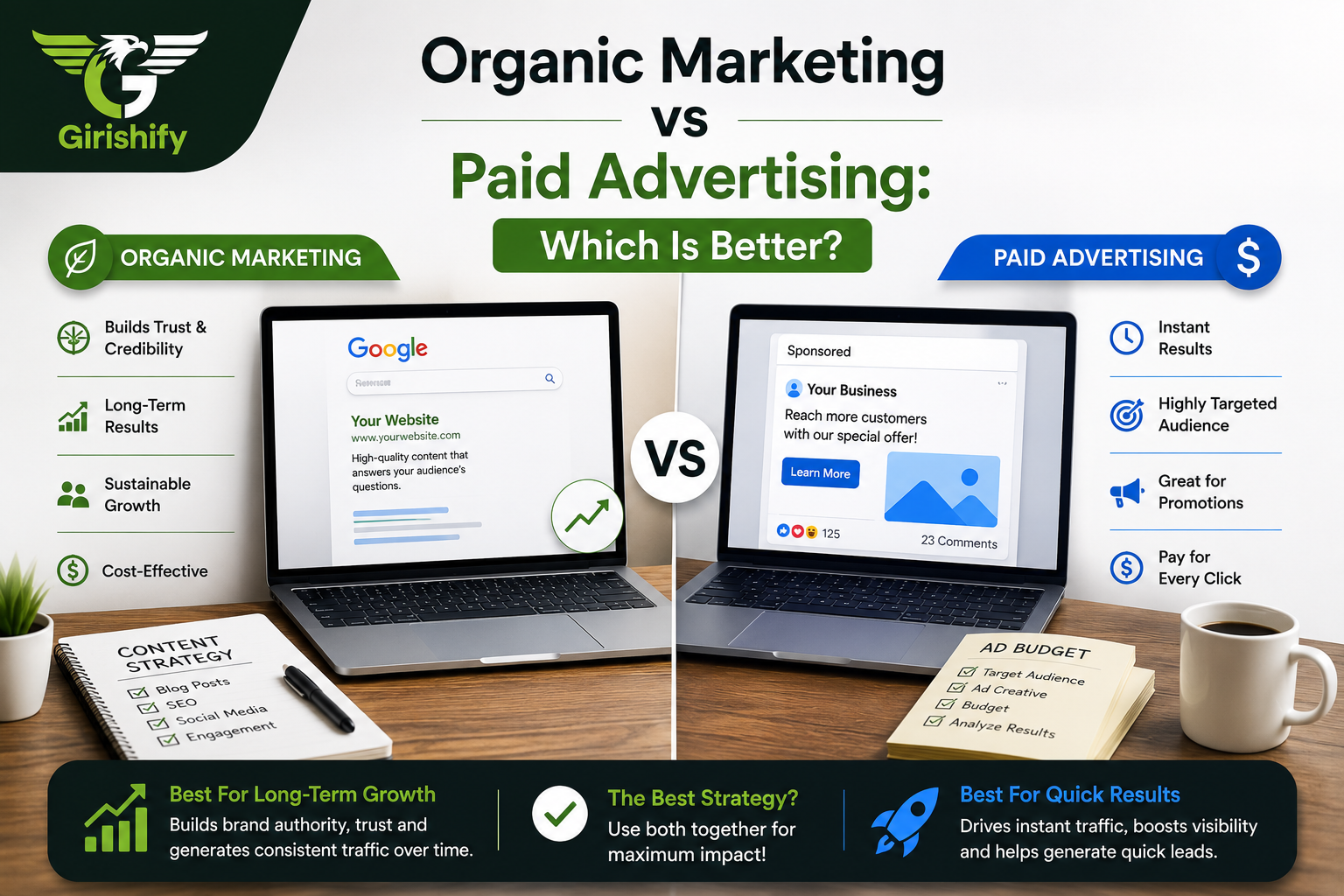
Organic marketing takes time, but it helps you build trust and creates steady traffic over the long run.
What Is Paid Advertising?
Paid advertising means paying platforms like Google, Facebook, or Instagram to show your business to potential customers.
You can choose who sees your ads based on location, interests, age, or search terms.
Paid ads can bring visitors to your website almost immediately, making them useful for product launches, promotions, or seasonal campaigns.
The Benefits of Organic Marketing
One of the biggest advantages of organic marketing is that the results can last for a long time.
For example, a well-written blog post can continue bringing visitors months after it’s published. The same goes for a website that ranks well on Google.
Other benefits include:
- Builds trust with your audience
- Brings consistent website traffic
- Improves your search engine ranking
- Doesn’t require paying for every visitor
- Supports long-term business growth
Organic marketing takes patience, but the results often continue even after the work is done.
The Benefits of Paid Advertising
Paid advertising is ideal when you need quick visibility.
If you’re launching a new service or running a limited-time offer, ads can help you reach the right audience within hours.
Some advantages include:
- Instant traffic
- Target specific audiences
- Easy to measure results
- Flexible budget options
- Great for promotions and special offers
The downside is that traffic usually stops once your advertising budget runs out.
Which One Costs Less?
Organic marketing usually costs less over time because you’re creating content that continues to work for your business.
Paid advertising requires an ongoing budget. The more visitors you want, the more you’ll generally spend.
That doesn’t mean paid ads are a bad investment. They simply work differently.
Should You Choose One or Use Both?
The truth is, you don’t have to choose only one.
Many successful businesses use both strategies together.
For example:
- Use SEO and blog content to attract long-term visitors.
- Run paid ads when launching a new product or service.
- Share useful content on social media while promoting important offers through advertising.
This approach helps you build steady growth while still getting quick results when needed.
Which Strategy Builds More Trust?
People often trust businesses they discover naturally through Google searches or helpful articles.
When your website answers questions and provides useful information, visitors are more likely to see your business as reliable.
Paid ads can increase visibility, but trust usually comes from the experience visitors have after they arrive on your website.
Final Thoughts
Organic marketing and paid advertising both have their place in a successful marketing strategy.
If you’re looking for long-term growth, focus on creating helpful content, improving your website, and investing in SEO.
If you need immediate visibility or want to promote a special campaign, paid advertising can help you reach your audience quickly.
The best strategy is to understand your business goals and use the right approach at the right time. A balance of both often delivers the strongest results.