Why Adding Keywords Doesn't Always Improve SEO
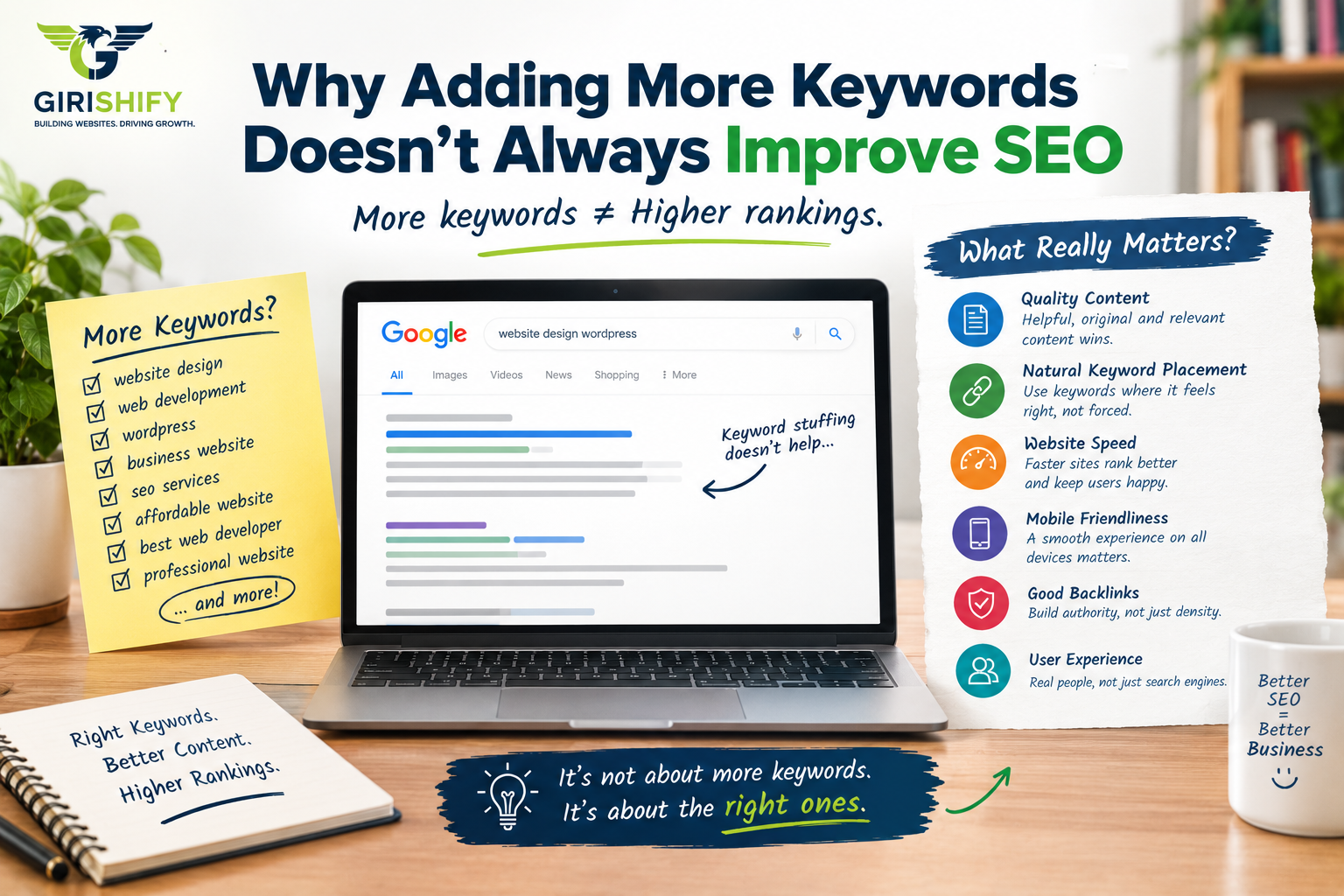

There is an old habit in online marketing that simply does not fade away. It is the belief that stuffing your keyword into every paragraph will push Google to put you at the top of the list.
It usually looks like this:
“If you need web design our affordable web design company offers the most affordable web design services for small businesses looking for affordable web design.”
Twenty years back search engines were word‑matching machines and that trick really worked.
Today doing that is one of the ways to bury your site on page ten of the search results.
If you have been stuffing your pages with keywords hoping to climb Google’s rankings only to see your traffic flatline here is why keyword stuffing backfires. What actually works instead.
1. Google Reads for Meaning, Not Just Word Counts
Search engines no longer count how often a specific phrase shows up on a page.
Modern search algorithms use natural language processing to understand search intent the question or problem behind a user’s search. Google looks at the context of your article, related terms and whether your content actually answers what the searcher needs.
When you artificially force the phrase into every headline and sentence you are not helping search engines understand your page. You are simply making your content awkward and robotic.
2. You Scare Away Real Humans
Rankings mean nothing if nobody stays on your site enough to hire you.
Think about what happens when a real customer lands on a keyword‑stuffed page:
- The sentences sound unnatural and clumsy.
- The content feels like a sales pitch instead of helpful advice.
- Readers get frustrated, hit the button and click on a competitors link.
When visitors instantly bounce away from your site Google notices. A high bounce rate tells search engines that your page did not provide an experience, which pulls your rankings down even further.
3. It Ruins Your User Experience (UX) and Design
A great website layout relies on a visual hierarchy: bold punchy headlines, easy‑to‑scan bullet points and clear calls to action.
When you prioritize stuffing keywords over communication:
- Headings become unreadable three‑line tongue twisters.
- Menus and buttons get cluttered with phrases.
- The mobile reading experience suffers because paragraphs turn into walls of text.
Clean web design and conversational copy keep readers engaged. Cramming words into places they don’t belong just creates friction.
4. Over-Optimization Can Trigger Search Penalties
What Actually Works for SEO Today
If repeating keywords over and over doesn’t work, what should you do instead?
Focus on Search Intent: Ask yourself what the searcher is actually trying to solve. If someone searches for “how to fix slow website,” they don’t want to read the phrase twenty times—they want a straightforward list of steps to compress images and clean up backend scripts.
Use Natural, Related Terms: Write naturally. If you’re writing about responsive design, you will naturally mention terms like mobile devices, screen sizes, Bootstrap grids, tablet layouts, and touch targets. Google recognizes these related terms and uses them to verify your topic expertise.
Prioritize Page Speed and Mobile Usability: Google places massive ranking weight on how fast and clean your site runs. A fast-loading site built with lightweight, custom CSS and clean code will outrank a slow, bloated site loaded with keywords almost every single time.
Keep Navigation Clear and Accessible: Place your primary topic in your main H1 title, your URL slug, and naturally once or twice in the opening paragraph. Then focus the rest of your page on clear headings, helpful answers, and intuitive custom layouts.
The Verdict
Keywords still matter,. They are a compass, not a battering ram. Their job is to guide the topic of your page not dominate every sentence you write.
Write for beings first build on clean technical foundations and let search engines reward you for providing genuine value.
If you want a site built with clean code, lightning- loading speeds and solid human-friendly SEO practices from the ground up the team, at Girishify designs custom high-performing websites that look great and rank naturally. I know how important it is for a site to load fast and to be easy to find.