

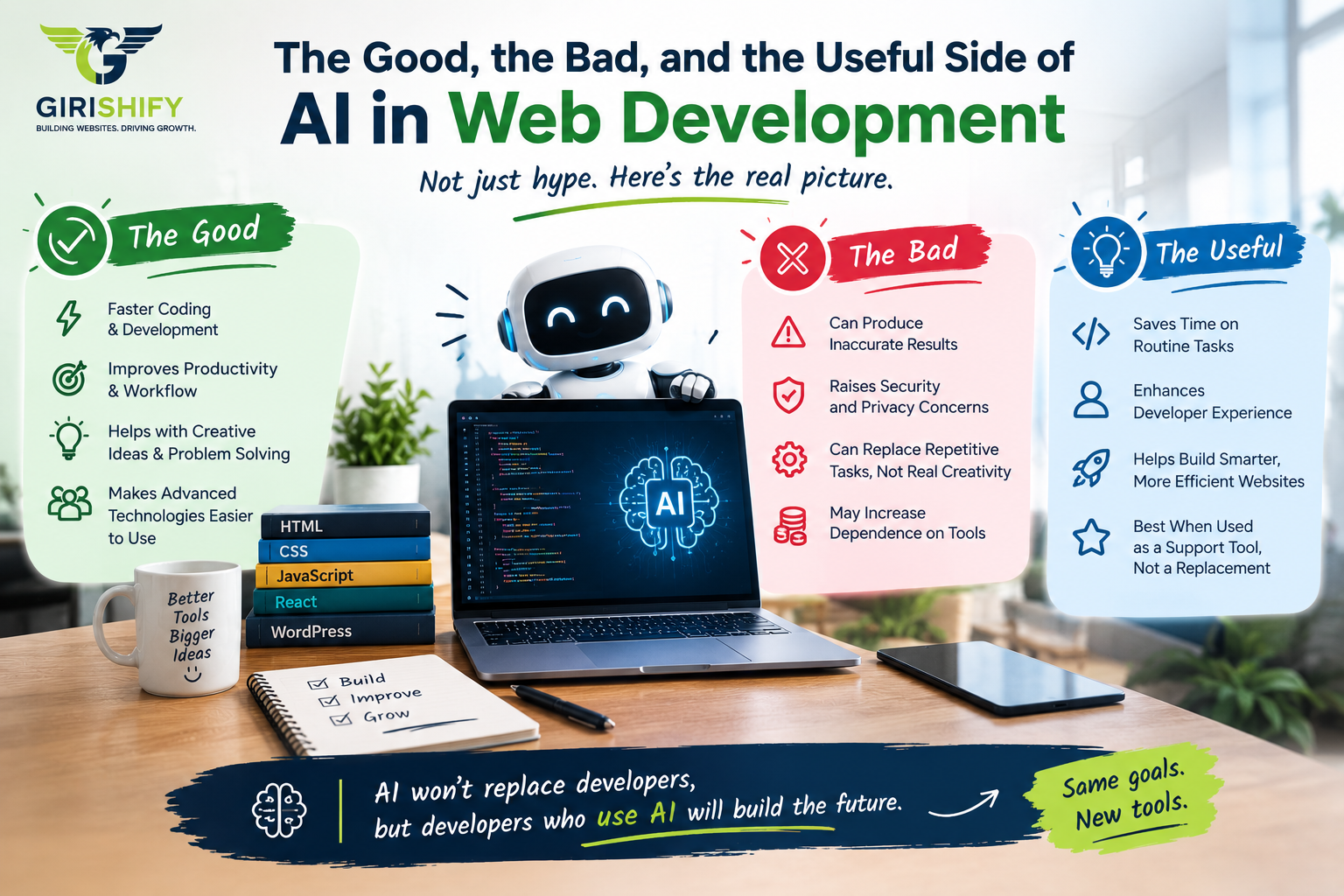
The Good, the Bad, and the Useful Side of AI in Web Development

Every tech feed right now is full of wild claims about artificial intelligence.
Some say human web developers will be completely out of a job by next year. Others swear you can build a six-figure online business just by typing three prompts into an AI site generator while sipping coffee on the beach.
The reality isn’t quite that dramatic.
AI has arrived in web development, and it isn’t going away. But like any new technology, it brings real shortcuts, clear risks, and a handful of genuinely practical uses.
Here is an honest, everyday breakdown of the good, the bad, and the truly useful side of AI in web development right now.
The Good: Speeding Up the Boring Stuff
Nobody gets into web design because they love typing repetitive lines of boilerplate code or hunting for a missing closing tag for forty minutes.
That’s where AI shines brightest:
Instant Boilerplates: Need a basic contact form setup, a simple pricing table grid, or a clean CSS reset? An AI tool can spit out the raw HTML structure in five seconds flat, saving a developer twenty minutes of typing.
Rapid Idea Generation: Staring at a blank screen is the hardest part of any project. Feeding a quick prompt into an AI tool can give you three rough layout concepts or dummy text blocks to kickstart your creative process.
Catching Small Syntax Mistakes: When a script refuses to run because of a stray comma or a broken loop, pasting the snippet into an AI prompt can pinpoint the bug right away.
Used this way, AI isn’t replacing the human; it’s simply acting like a fast assistant who handles the tedious groundwork.
The Bad: Bloat, Clones, and Silent Breakdowns
Here is what the hype videos don’t show you: when you let AI run wild and try to build an entire website from scratch with zero human oversight, things go south fast.
Heavy, Copy-Paste Code: AI models don’t write code from genuine understanding; they piece together patterns they scraped from across the web. That often means outdated methods, bloated scripts, and redundant code that drags down your loading speeds.
The “Cookie-Cutter” Problem: Have you noticed how every fully AI-generated website looks almost identical? They use the same generic hero layouts, sterile stock-photo vibes, and robotic headlines. They have no personality, no brand voice, and nothing that makes a customer remember them.
It Can’t Judge Real Human Experience: An AI can drop a button onto a canvas, but it doesn’t know why a customer clicks it. It doesn’t know how a layout feels under a person’s thumb on an Android phone, or how to design a navigation menu that feels natural to a 55-year-old service client.
Silent Errors: AI will hand you broken code with absolute confidence. If a form fails to send client emails or a database query times out on a live server, the AI won’t know unless a real developer steps in to diagnose it.
The Truly Useful Side: How Real Teams Use AI Today
The smartest developers aren’t fighting AI, but they aren’t turning their business over to it either. They use it as a power tool to build better, faster websites for real clients.
Here is what the sweet spot looks like:
Smarter Frontend Work: A developer uses AI to quickly draft responsive grid structures (like Bootstrap columns or Flexbox layouts), then manually fine-tunes the CSS so the page opens instantly on mobile screens.
Polished Content Drafting: Instead of putting generic “Lorem Ipsum” dummy text into a mockup, a designer uses AI to write realistic draft copy, then edits it into plain, conversational English that sounds like a real business owner.
SEO Foundations: AI can help quickly suggest meta descriptions, format title tags, and spot basic structural errors, freeing up time to focus on real on-page strategy and page speed optimization.
When you blend AI speed with human craftsmanship, projects get completed faster without sacrificing clean code, security, or custom design.
The Verdict
AI in web development isn’t magic, and it isn’t an enemy—it’s just a tool, like a power drill.
If you give a power drill to someone who doesn’t know how to build a table, they’ll just put holes in the wall. But in the hands of an experienced carpenter, that same tool helps build a sturdy table in half the time.
A great business website still needs human strategy: understanding your market, designing custom layouts that fit your brand, and writing clean, lean code that loads in a split second.
If you want a site that turns casual visitors into paying customers—built with clean code, fast loading speeds, and a sharp eye for detail—the team at Girishify brings together modern development tools and genuine human design to build websites that work.